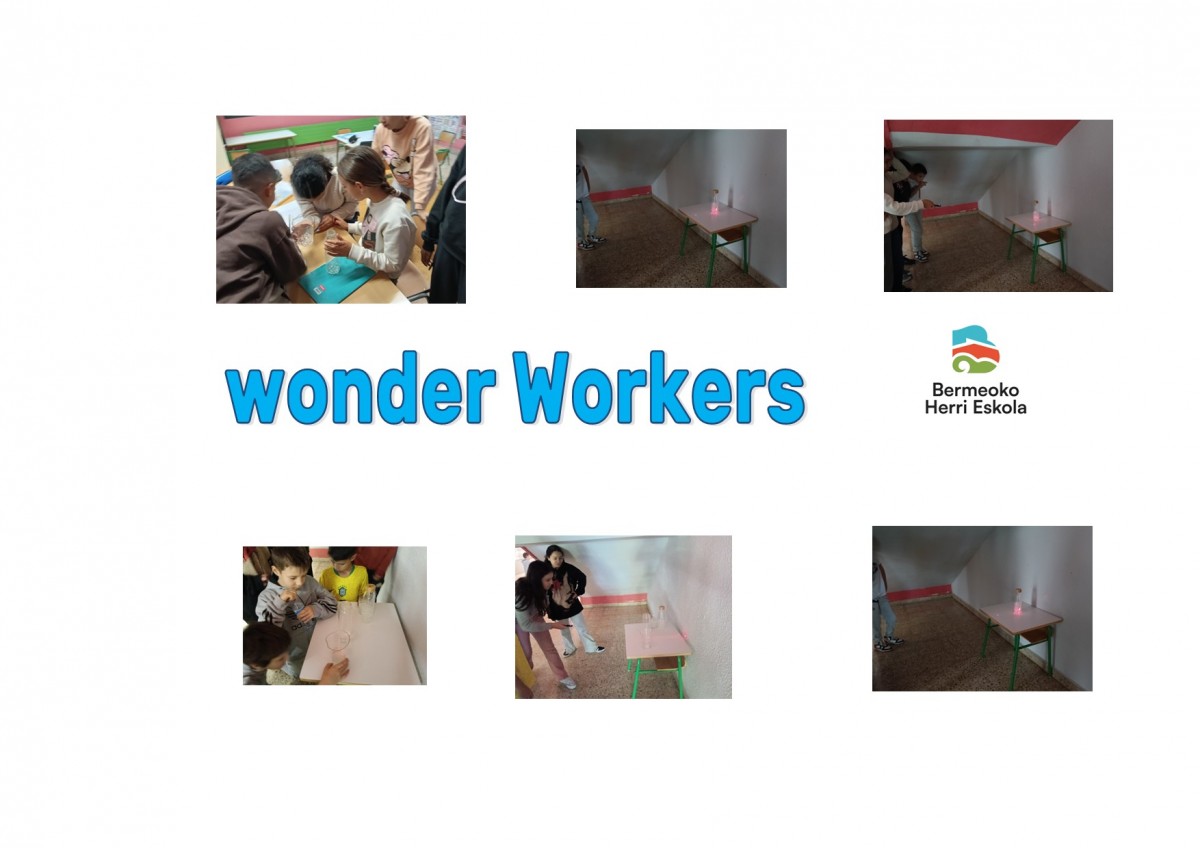
We have verified that light travels differently depending on the medium it is in. We really enjoyed seeing the laser light deflected by the Orbeez and took the opportunity to see what happened when we focused the laser on different materials in the classroom. We also took the opportunity to leave the Orbeez in different amounts of water and see how their volume increased significantly. We found it very interesting!
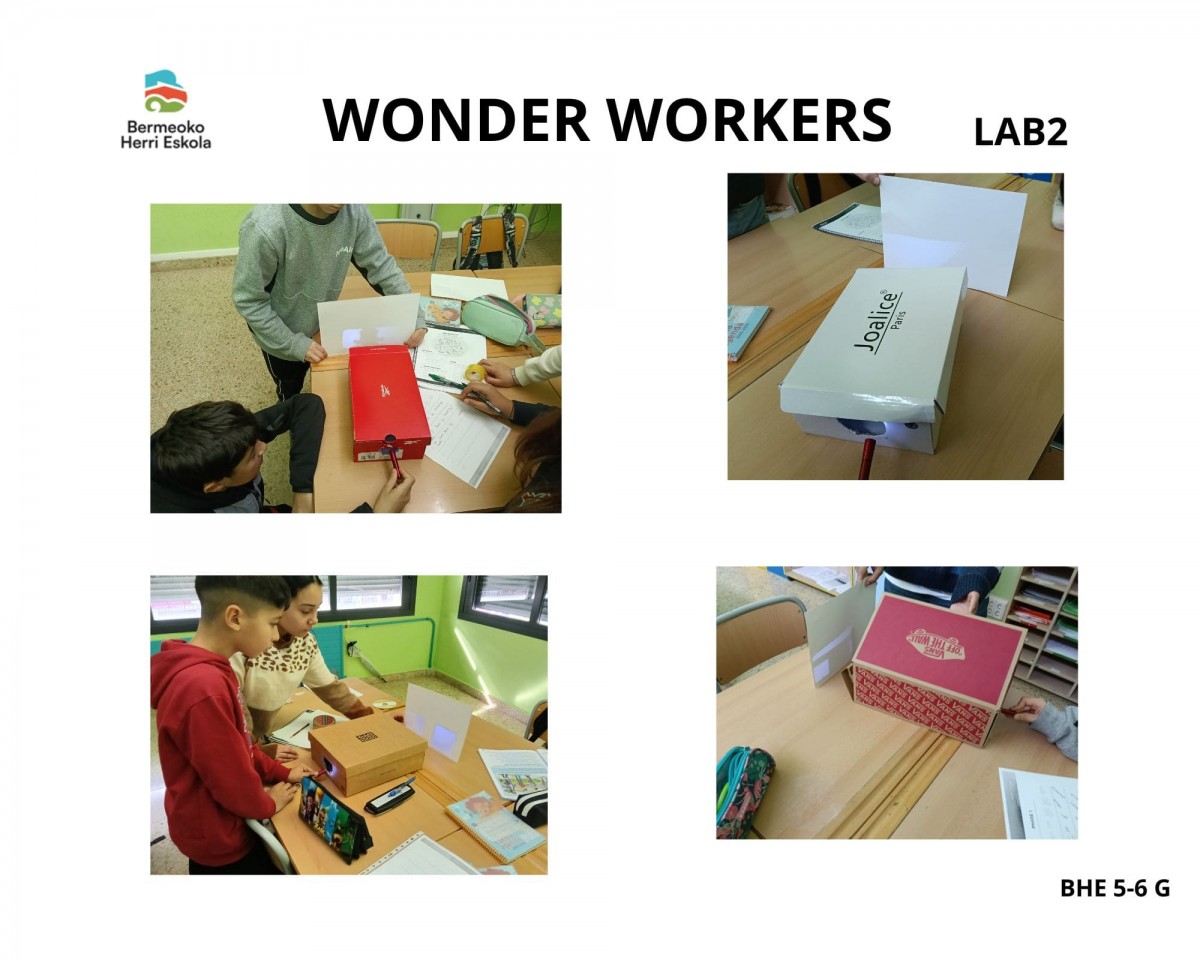
We have learnt that the objects play with light in different ways. Opaque objects act like a wall and don't let any light pass through, which is why they make dark shadows, while translucent objects only let a little bit of light through, making things look blurry. Some objects can block light but also be very shiny, which means they bounce light around in different directions. By being a "light detective" and watching how light hits or goes through things, we can learn what an object is made of and what its shape is, even before we touch
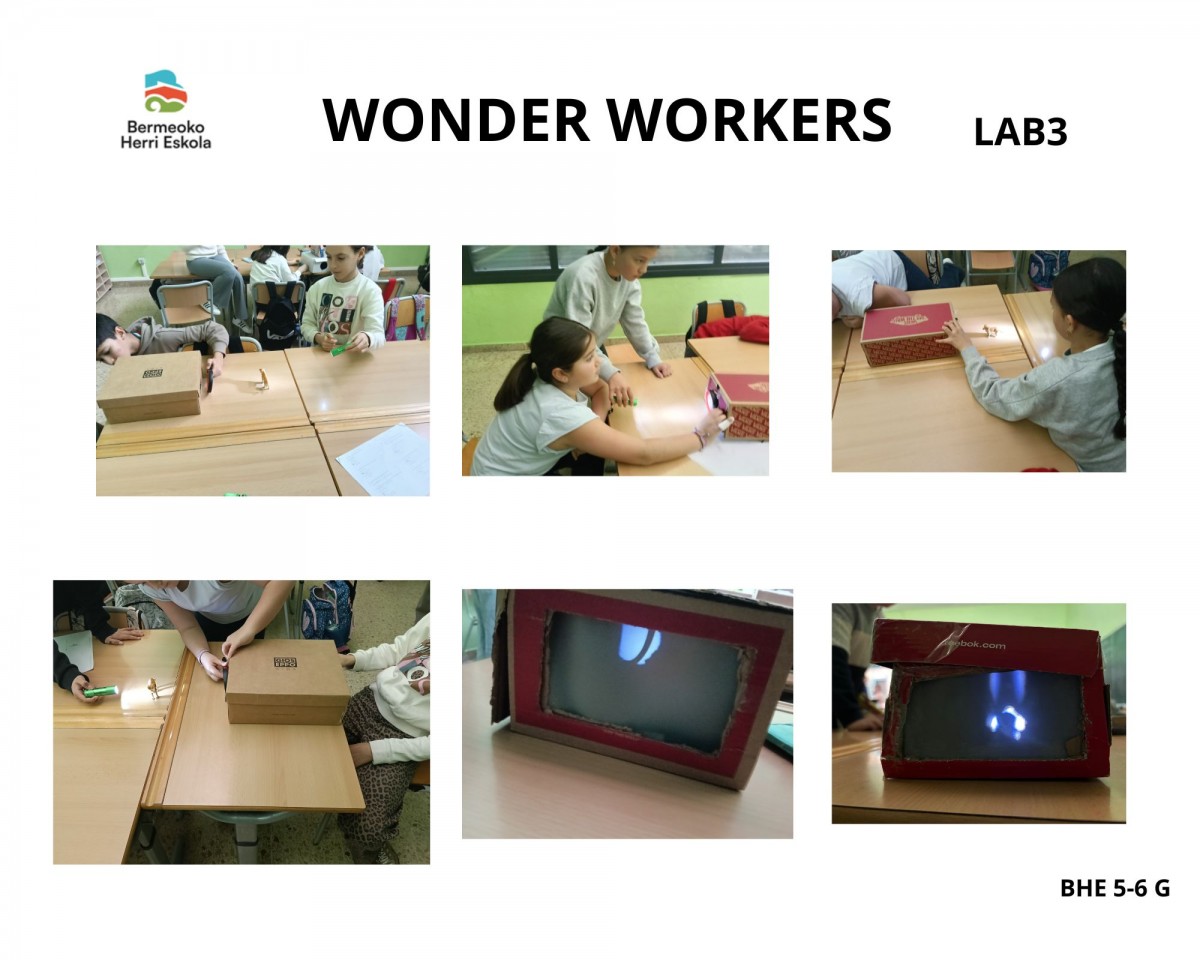
With this experiment we have solved these questions: 1. Why do we move objects? To get a clear and sharp picture, we need to move the object. If it is too close or too far, the image looks blurry. We look for the "perfect spot" where the light rays meet exactly on the screen. 2. Why do we use greaseproof paper? We use this paper as a screen. It is translucent, which means it lets some light pass through. This allows us to see the image of the object on the back of our camera. 3. How do we see things the right way up? The image inside our eyes is actually upside down, just like in the camera obscura! But our eyes don't "see"; they only catch light and send signals to the brain. Our brain is very smart: it takes the upside-down picture and flips it so we see the world the right way up.
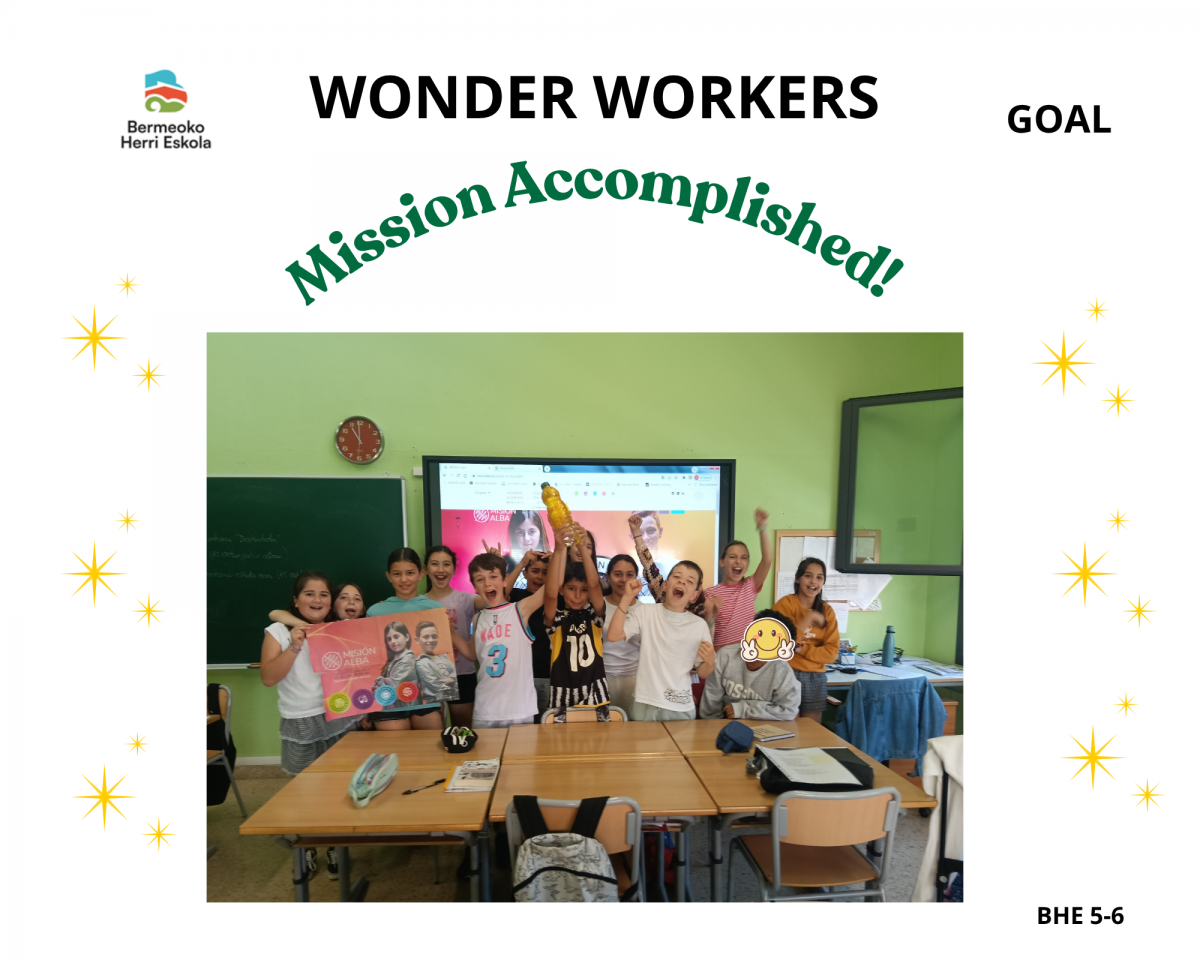
General experience Some of us had a great time and found it quite interesting, but others got a bit bored because they don't like science and it was in English. What we learned Some of us learned a lot of new things about light, like refraction and how it works. The best part The best part was doing the experiments, especially the bottle experiment (Moser Lamp). However, we didn't like writing the conclusions. Future plans Only a few of us would love to do it again next year, but the others would not.


Utilitzem cookies pròpies i de tercers per a finalitats analítiques i tècniques; tractant dades necessàries per a l'elaboració de perfils basats en els teus hàbits de navegació.
Pots obtenir més informació i configurar les teves preferències des de 'Configuració de cookies'.


 Tornar